



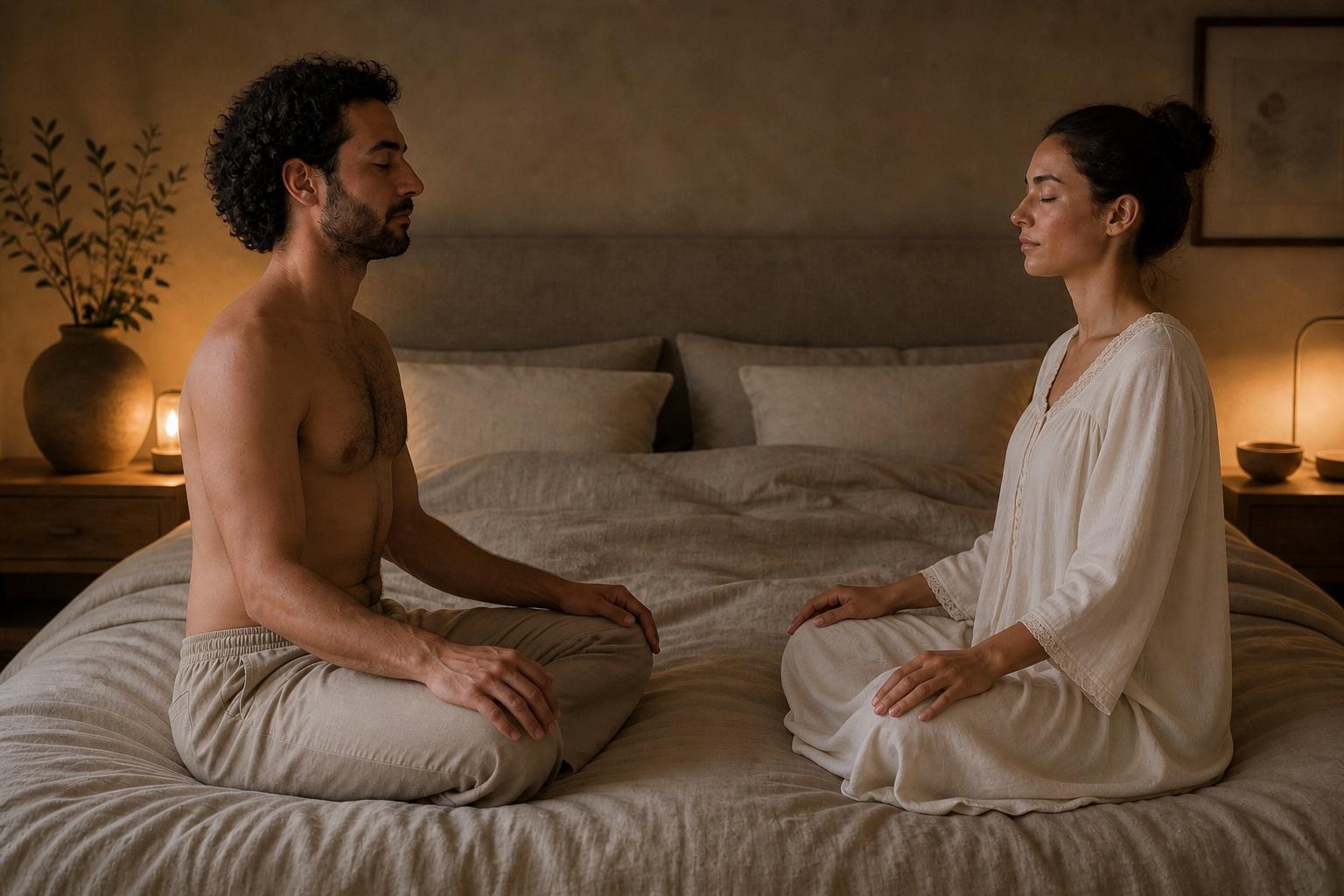
The body recognizes a caress, a pressure, or a change in temperature. However, what transforms these signals into a complete experience isn't always felt on the skin. Conscious pleasure arises when attention accompanies what is happening and allows us to perceive the anticipation, the trust, the internal rhythm, and the emotion that each gesture awakens. The physical aspect remains. It simply ceases to be isolated.
There are times when a pleasant sensation passes quickly because the mind is already waiting for the next one. At other times, a seemingly simple touch lingers, changes the breathing, and opens a stillness that is difficult to explain. The difference doesn't depend solely on the technique. It also arises from the way a person receives, interprets, and allows the experience to find a place within them.
The body remains the gateway
To speak of a pleasure that transcends the physical does not mean distancing oneself from the body. Quite the opposite. The temperature, the weight of a hand, the scent of the air, and the sound of breathing become clearer when they cease to compete with hurried thoughts. Perception gains depth because each stimulus has time to be recognized.
A person may then notice that not all areas respond in the same way or at the same pace. Some crave contact. Others need to wait. Listening to these differences transforms the body on stage into a participant, with its own signals that guide the experience without needing to turn it into a manual.
Attention transforms contact into experience.
The mind tends to anticipate. It wants to know what comes next, whether the reaction is appropriate, or how much longer until the imagined moment arrives. This vigilance fragments perception. Part of the attention remains focused on the interaction, while another part observes from the outside, as if evaluating a scene that is still unfolding.
When anticipation wanes, details intertwine. One gesture prepares the next, a pause preserves the echo of the previous one, and the body ceases to respond to isolated stimuli. Attention creates continuity . Thanks to it, pleasure is not reduced to a sum of pleasant sensations, but acquires direction and memory.
Emotion can arrive without a clear name.
Not every emotion manifests as a recognizable story. Sometimes it appears as calm, modesty, relief, or unexpected vulnerability. A person may feel something soften without knowing if it stems from contact, the environment, or the permission to let go of control over every response. It doesn't need to be resolved in that moment.
Imagine a room silent after several minutes of movement. The skin retains warmth, and the breath is still finding its rhythm. Suddenly, the stillness feels more intense than the previous movement. Pleasure also occupies inner spaces where sensation and meaning intertwine, though no word can completely separate them.
Memory and expectation play a role in what we feel
Each person arrives accompanied by past experiences. A scent may be welcoming to one person and distracting to another. One form of touch may spark curiosity, while another triggers a caution that is difficult to justify. Perception does not begin from scratch. It interprets the present with a memory that often works without making itself visible.
Expectation works in a similar way. It can awaken desire and prepare the imagination, but it can also narrow the path if everything must resemble a pre-planned scene. Leaving room for the unexpected allows the encounter to engage with fantasy without being subjugated by it. This leads to a more personal response, less focused on following a script.
Rhythm unites what the mind usually separates.
A sensory experience has its own rhythm. There is approach, growth, pause, and retreat. Rhythm provides a relationship between these phases and allows the body to understand what it is experiencing. It doesn't have to be slow from beginning to end. It can change freely, as long as the transitions maintain a perceptible intention.
According to our massage therapists' experience, many nuances emerge when touch doesn't rush to fill every second. A brief pause allows you to feel the pulse, the warmth, or the trace of pressure that has just been released. The interval is not empty . The experience continues from within and prepares you for what comes next.
Receiving requires a form of trust.
Openness is sometimes confused with a lack of boundaries. In reality, a person usually receives better when they know they can adjust the pace, express a preference, or stop a gesture. This possibility reduces vigilance. Trust doesn't require letting go, but rather makes constant protection unnecessary.
The body reveals this change with subtle signs. A posture loosens, breathing deepens, or attention settles where it previously wandered. Receptivity is a choice , not a quality one possesses or loses. It can grow during the encounter if the environment and communication allow each step to be understood.
What remains afterward is also part of the pleasure
The end of an experience doesn't immediately erase what happened. A particular calm, a vivid image, or the feeling of having been present in an unusual way may remain. This echo doesn't always contain a great revelation. Sometimes it consists of recognizing that the body continues to perceive even after contact has ended.
Pleasure then ceases to be merely a localized physical event. It includes the attention that sustained it, the trust that allowed it to be received, and the meaning each person attributes to it afterward. The experience continues in memory , not as an exact reproduction, but as a texture that helps us understand what conditions make it possible to feel more open and more connected.
A broader experience does not need immediate explanation
Trying to analyze each sensation as it happens can give the mind back the control it was relinquishing. Awareness isn't about narrating the moment internally. It's about remaining available to it, even when something ambiguous, contradictory, or difficult to name arises.
When the body, attention, and emotion cease to operate separately, pleasure acquires a new depth. Not because it reaches a higher goal, but because it engages more layers of the person. The physical aspect doesn't disappear. It becomes the visible language of an experience that also unfolds in the imagination, in trust, and in the intimate act of being present.